
Thousands of kilometres of Western Australian coastline, thousands of ships just beyond the horizon.
UWA Winter Collective, June 2025, Cuillty Gallery, UWA.
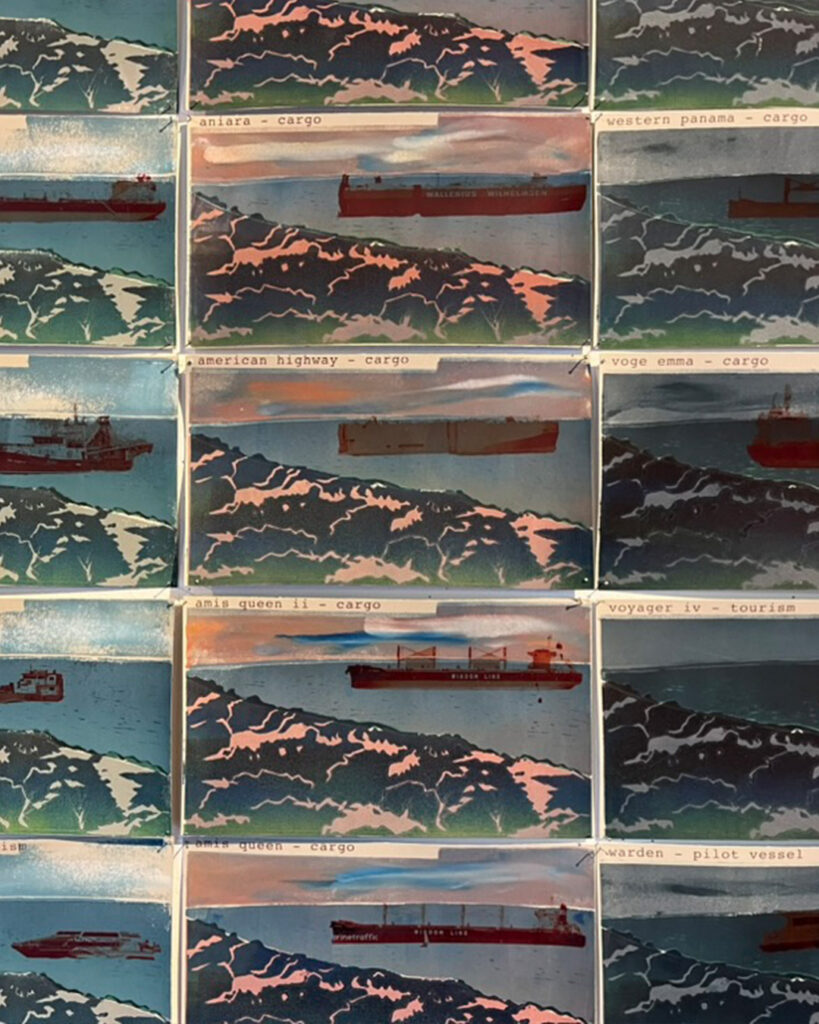
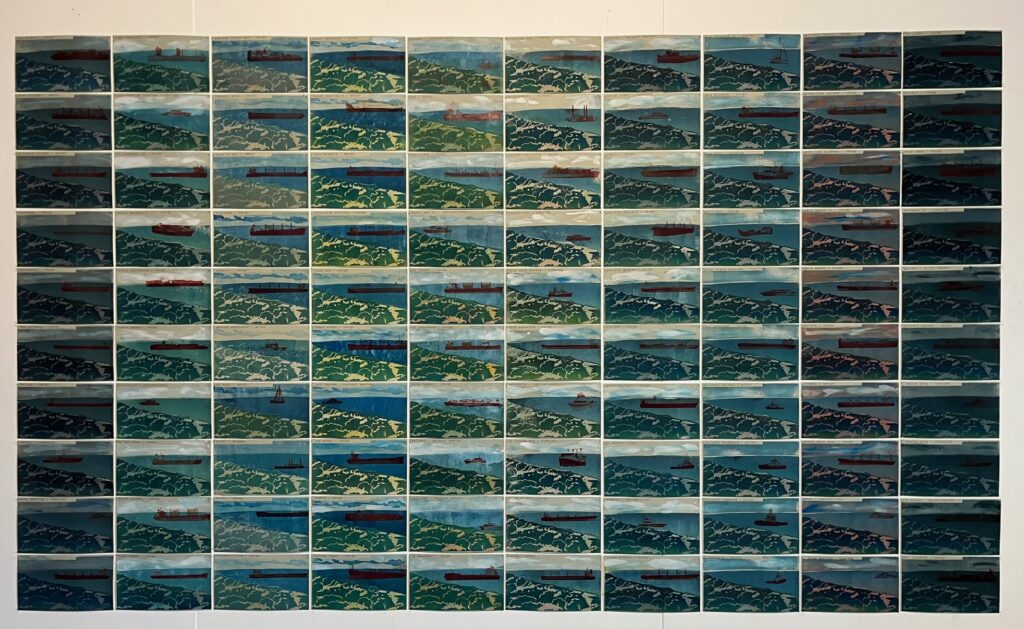
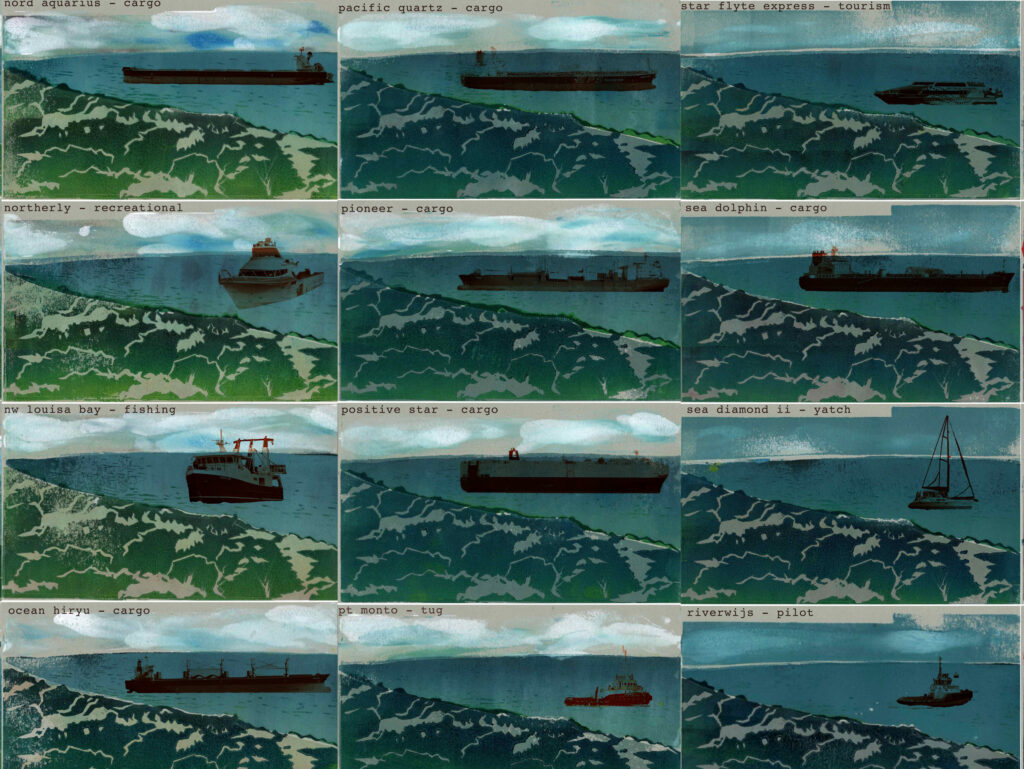
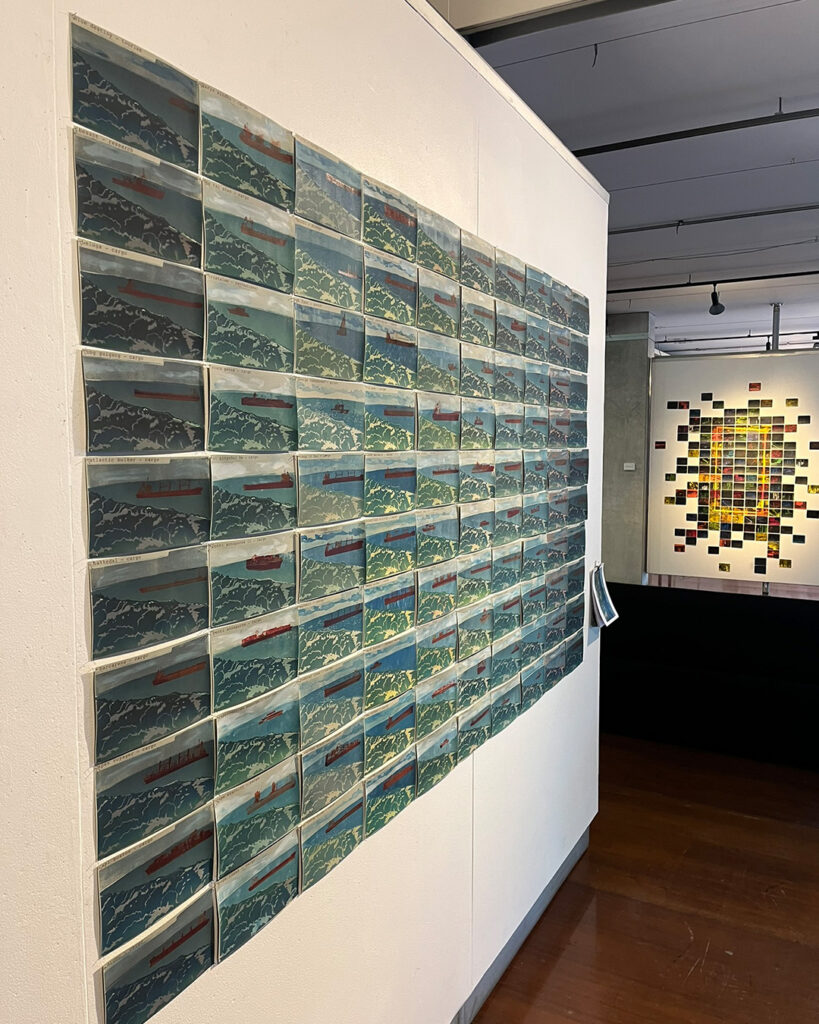
Position received via Satellite is a series of woodblock and LaserJet prints on paper that reflect on the vast Western Australian coastline. 10 editions of 10 variations are arranged in grid form reminiscent of surveillance records. The woodblock prints, inspired by ‘coastal cams’, reflect on time passing over a day. Each print features a unique boat that was within 100km of the south-west Western Australian coastline on a single day. Not included are the numerous unidentified vessels that are categorized on marinetraffic.com as “Cargo/Fishing Vessel, Position received via Satellite”. The vessels are identified through interactions with Australian and International ports. These vessels, printed in transparent red hues, are listed in alphabetical order reminiscent of archival record keeping. When standing on the beach, the visible horizon may be only 5km offshore. Most naval traffic passes further out to sea. This work contextualises the unseen naval traffic that frequently remains ‘out of sight and out of mind’.
Live coastline views are easily accessible through the Department of Transport website. Weather systems are recorded and published by the Australian Bureau of Meteorology. Live air traffic updates are reported on Flightaware.com. International naval traffic is reported live on MarineTraffic.com. These online resources allow interaction with the WA’s costal space without visiting it physically. Philosopher Michel Foucault described how surveillance gave power to the viewer over the subject, and that the subject may be controlled with the threat of constant surveillance. It may be argued that by making the information freely accessible online, the power over this space is diluted to insignificance. However, it is more likely that by making this information public, the owners of these surveillance sources, national and state governments, are advertising their panoptic control over Australian waters, for better or worse.