
Artist’s book.
Surface Tension is a photographic work on paper in the form of a concertina book. 28 photographic images have been manipulated digitally and printed with an ink jet printer. The book has been compiled using thread with a sewing machine. The work speaks to the resilience of water surfaces. Given enough gravity and surface tension, water will always return to level. The purpose of this work is to inspire community resilience. Surface tension of water is only achieved via cohesive forces between water molecules. Only by working together, can a community maintain structure to grow and create.
Exhibited in End of Semester Student Show
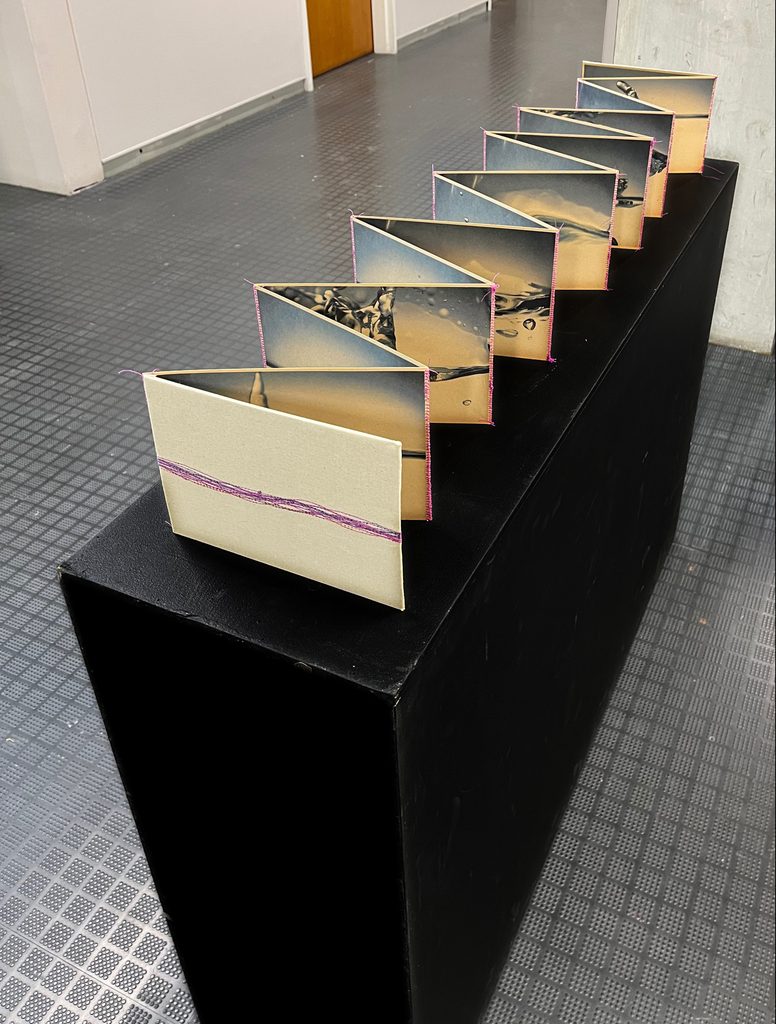
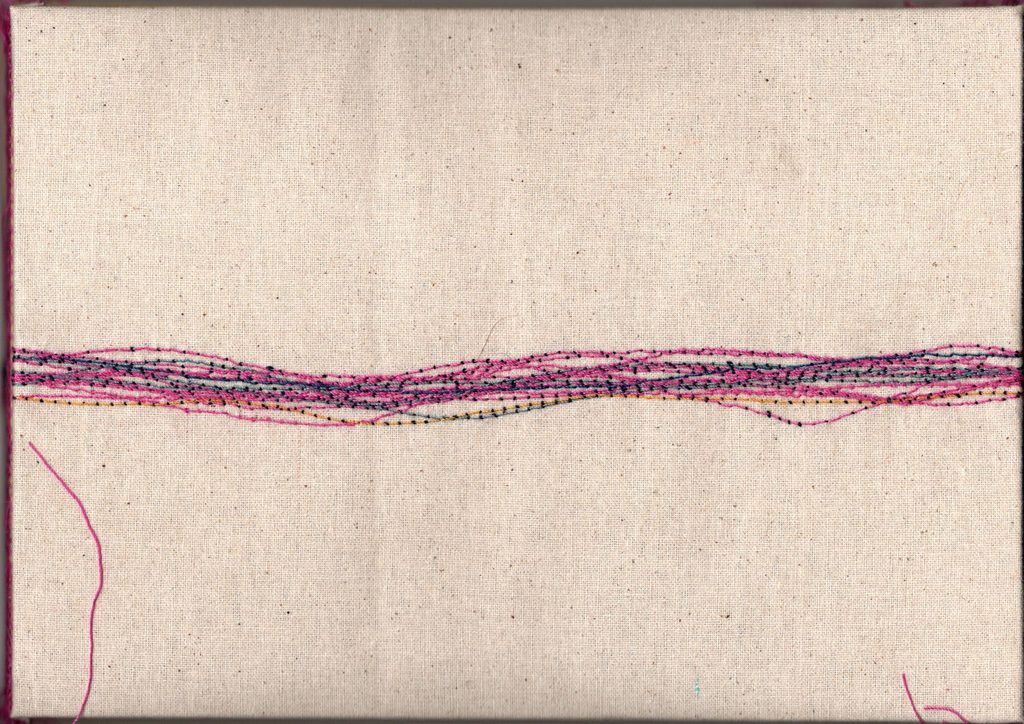
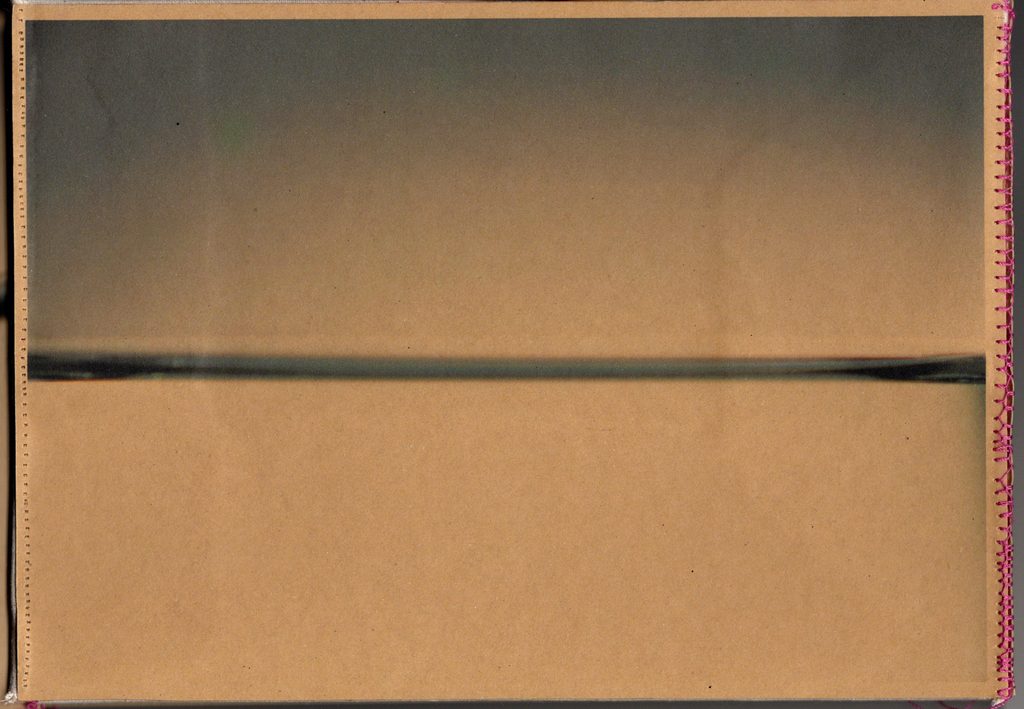
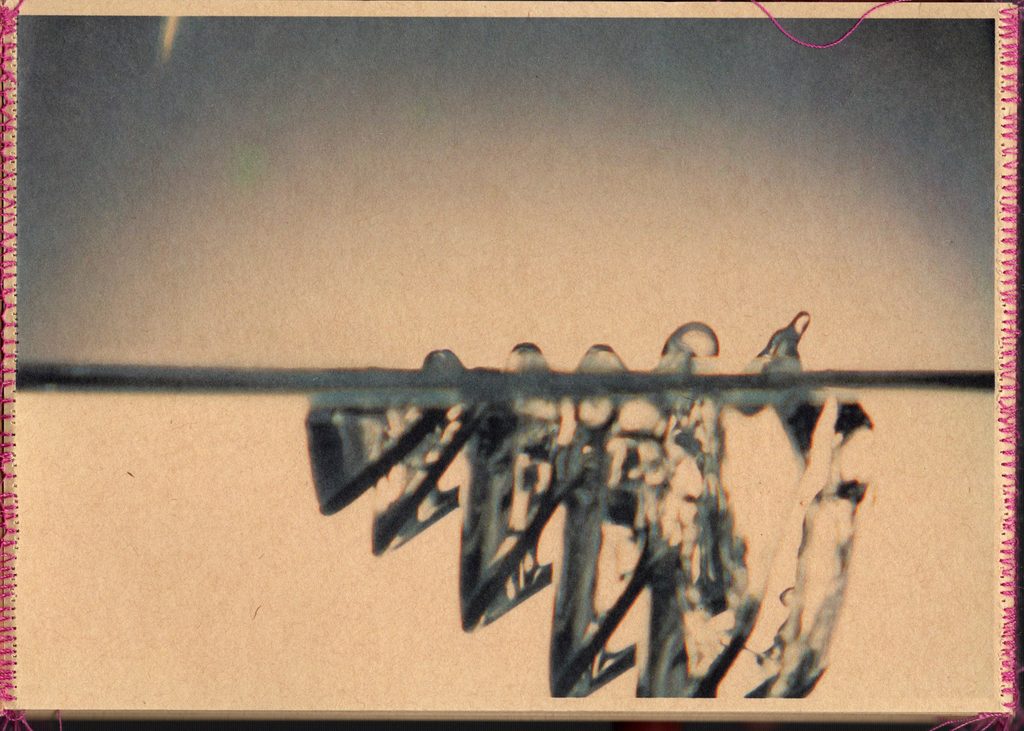
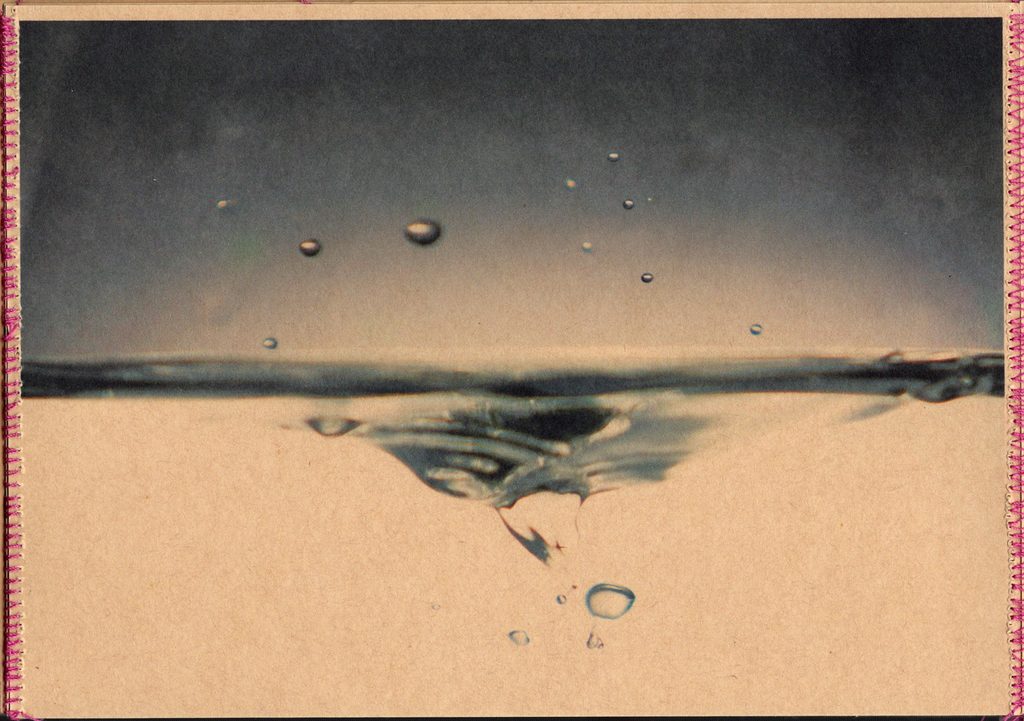
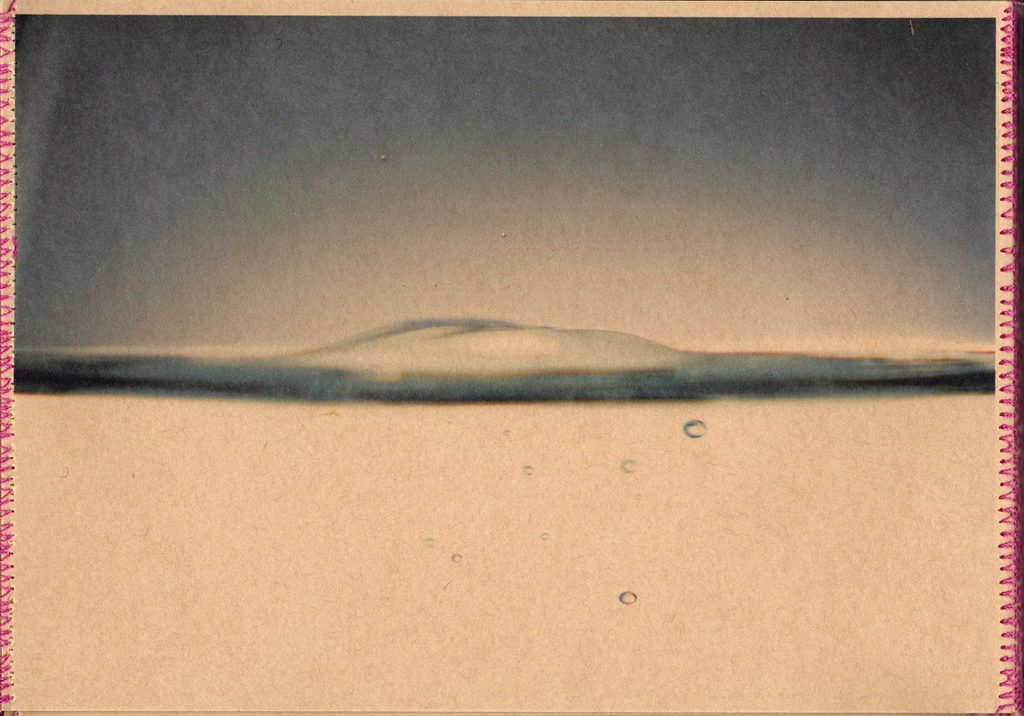
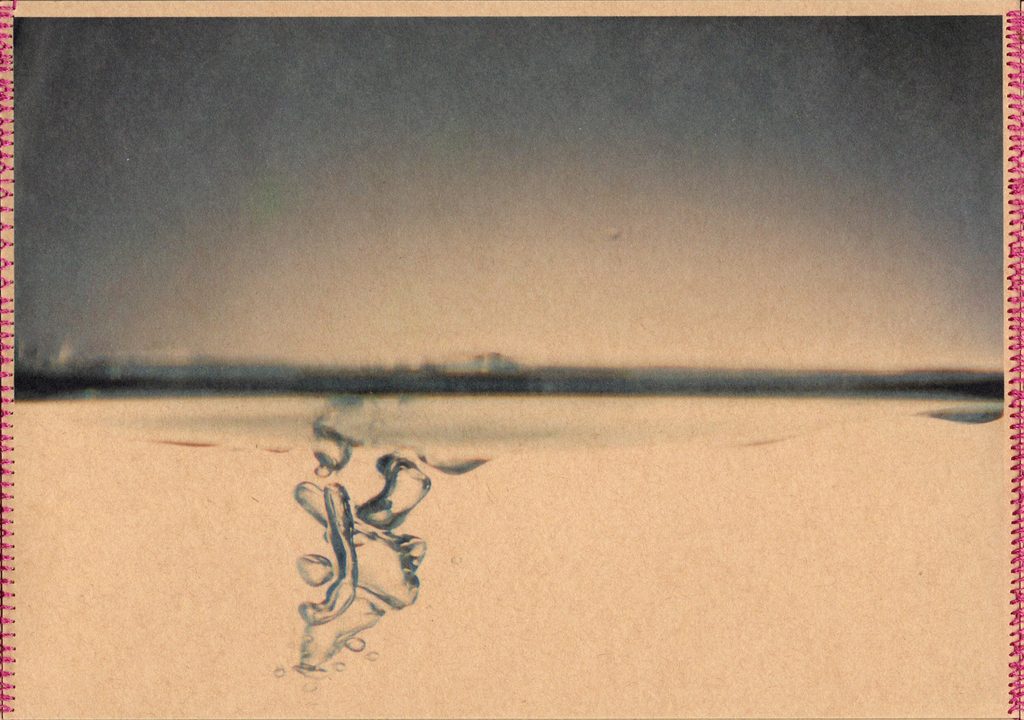
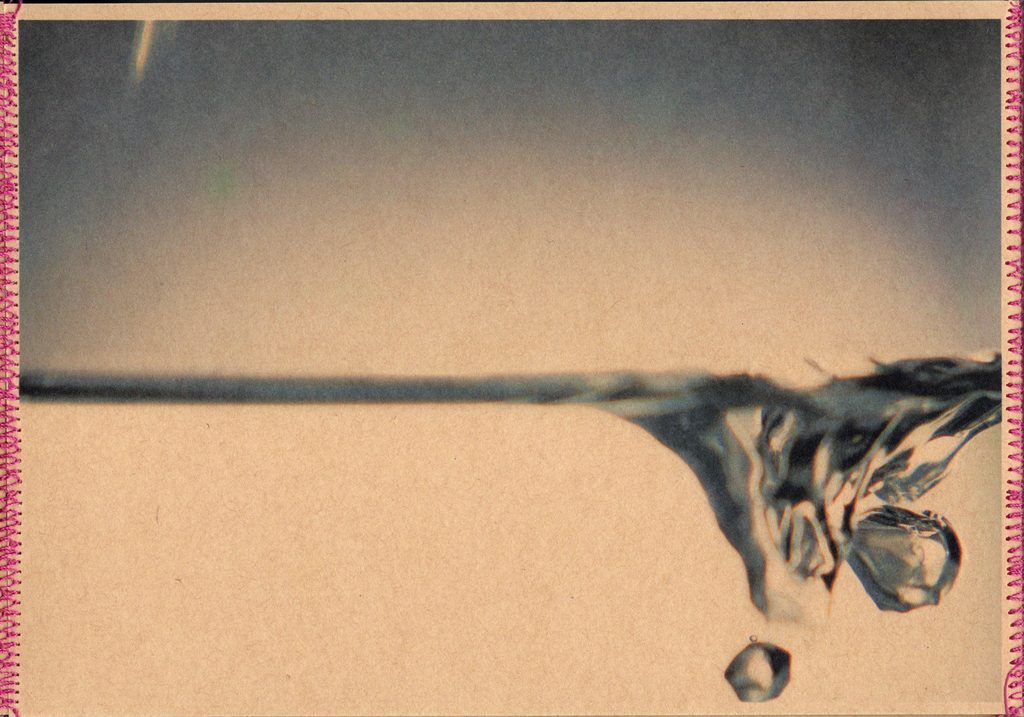
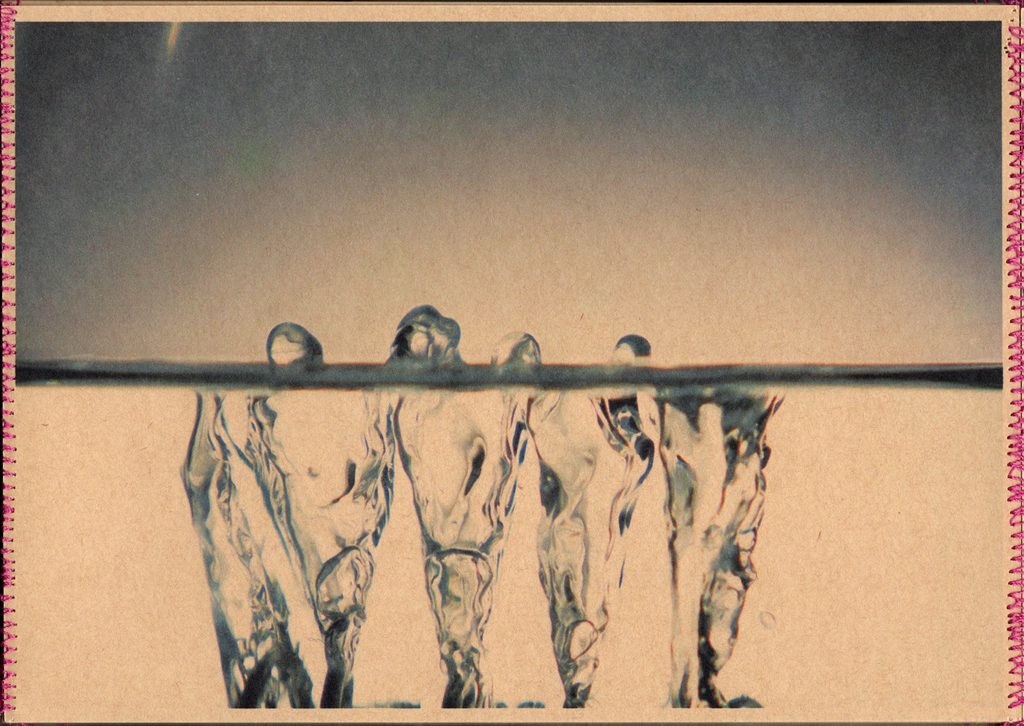
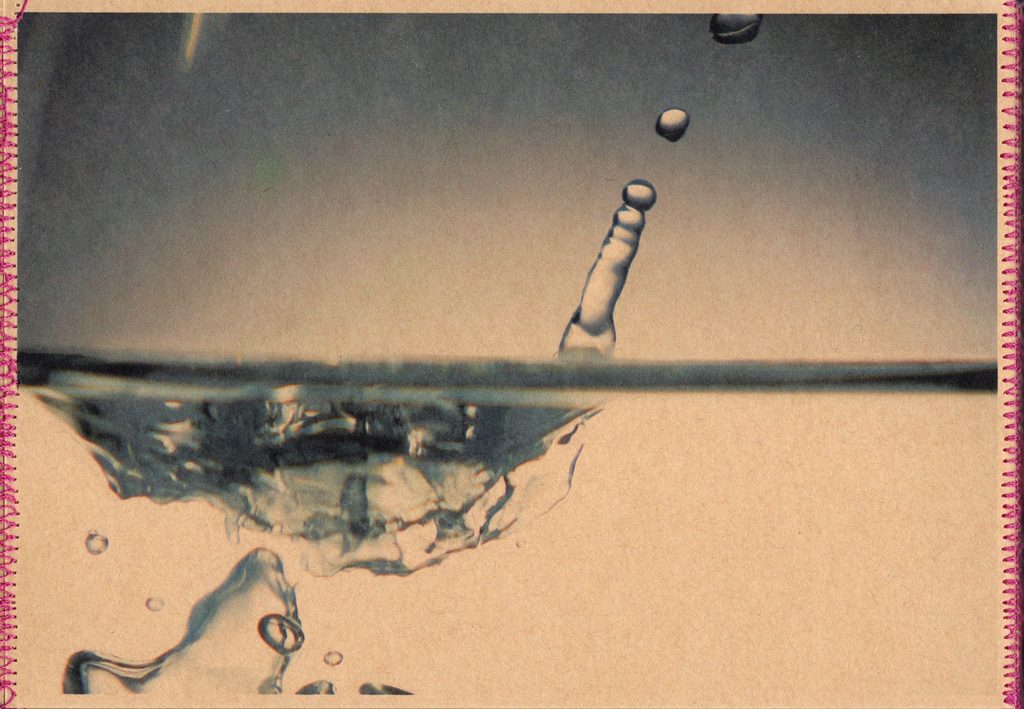
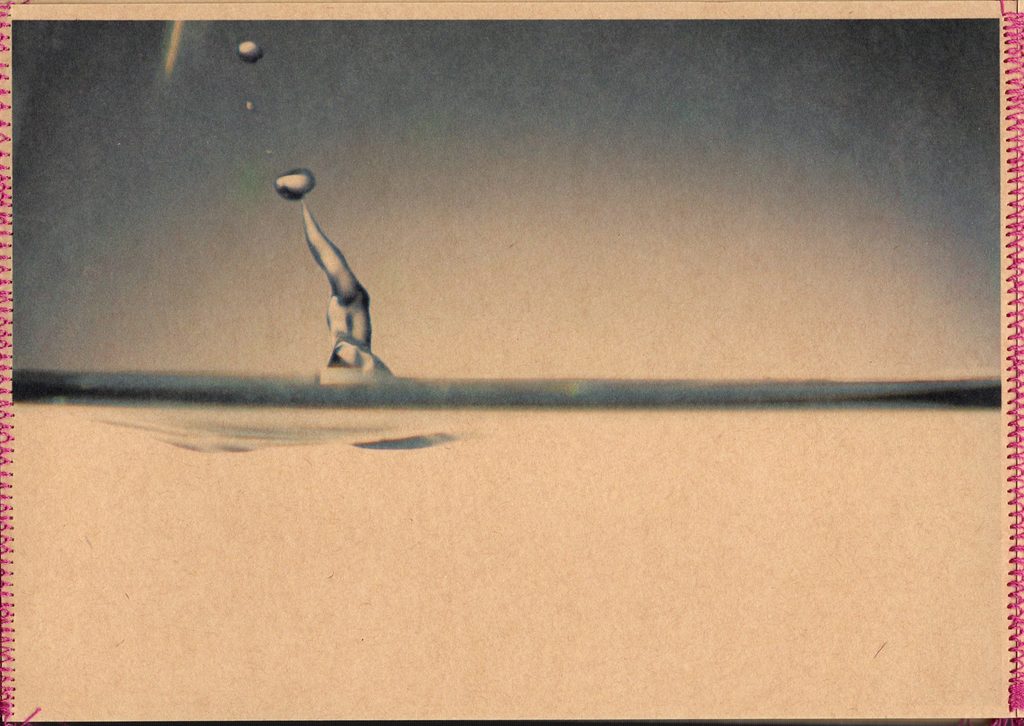
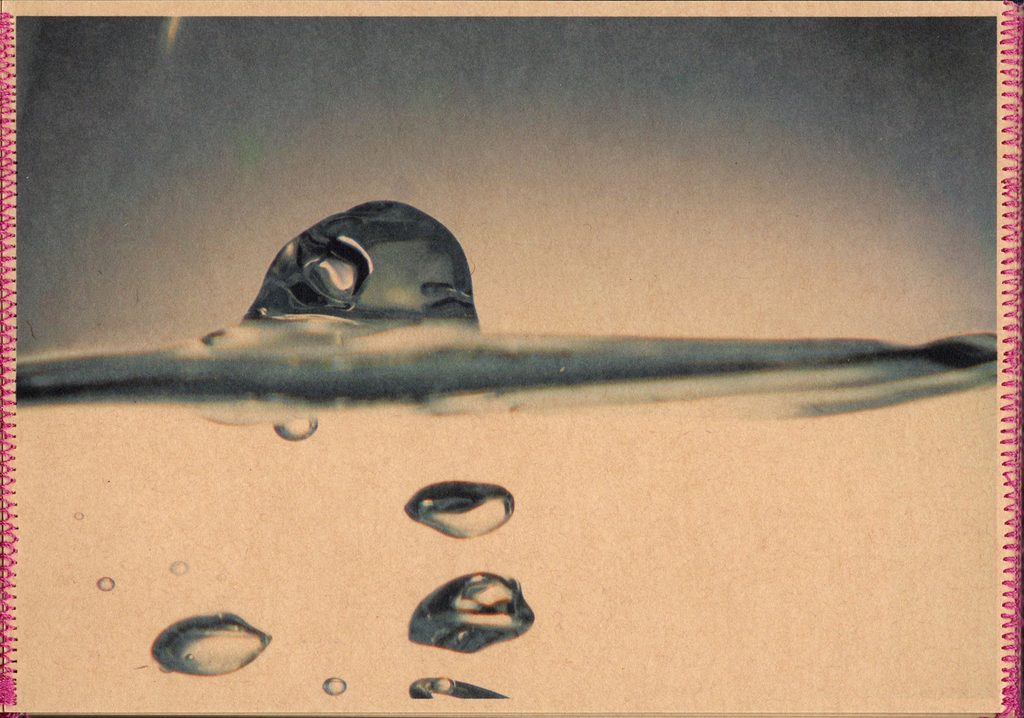
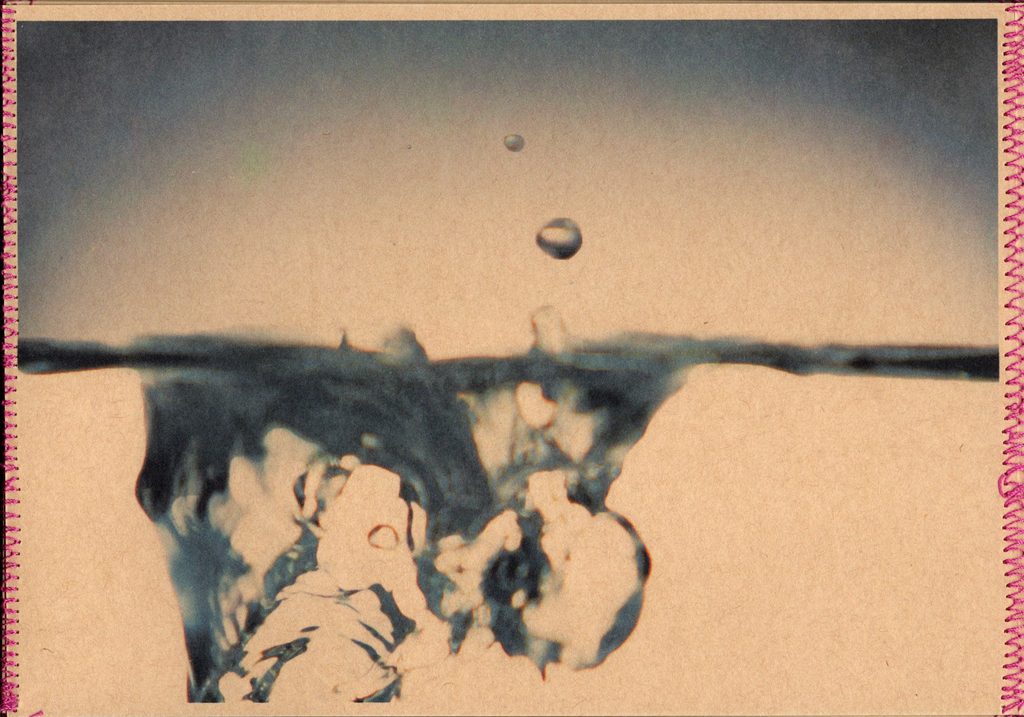
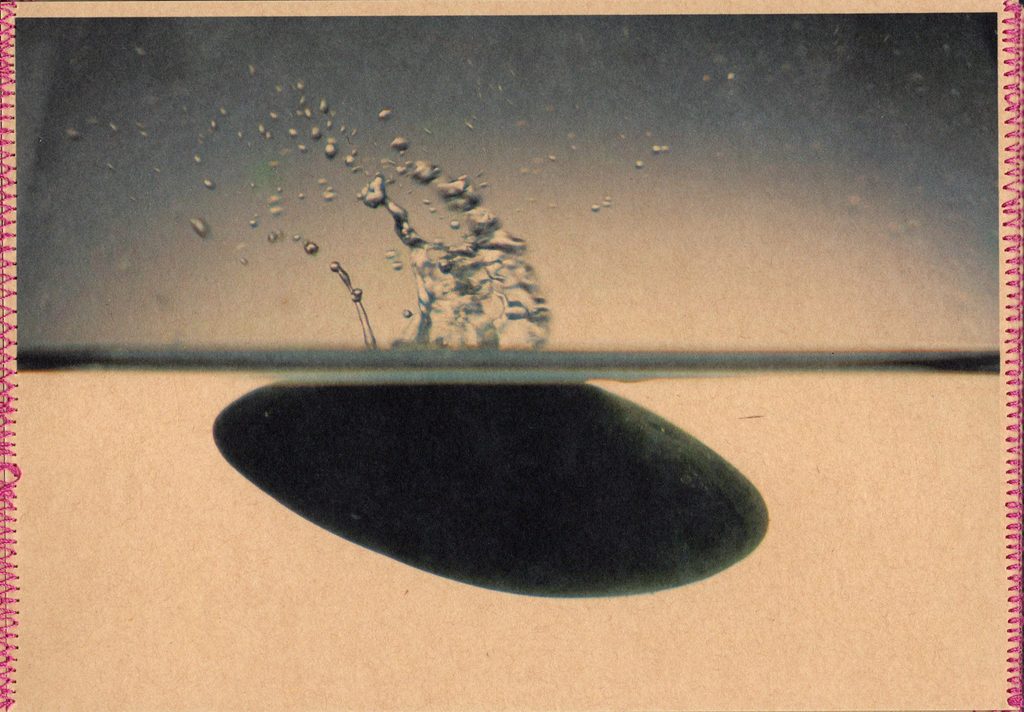
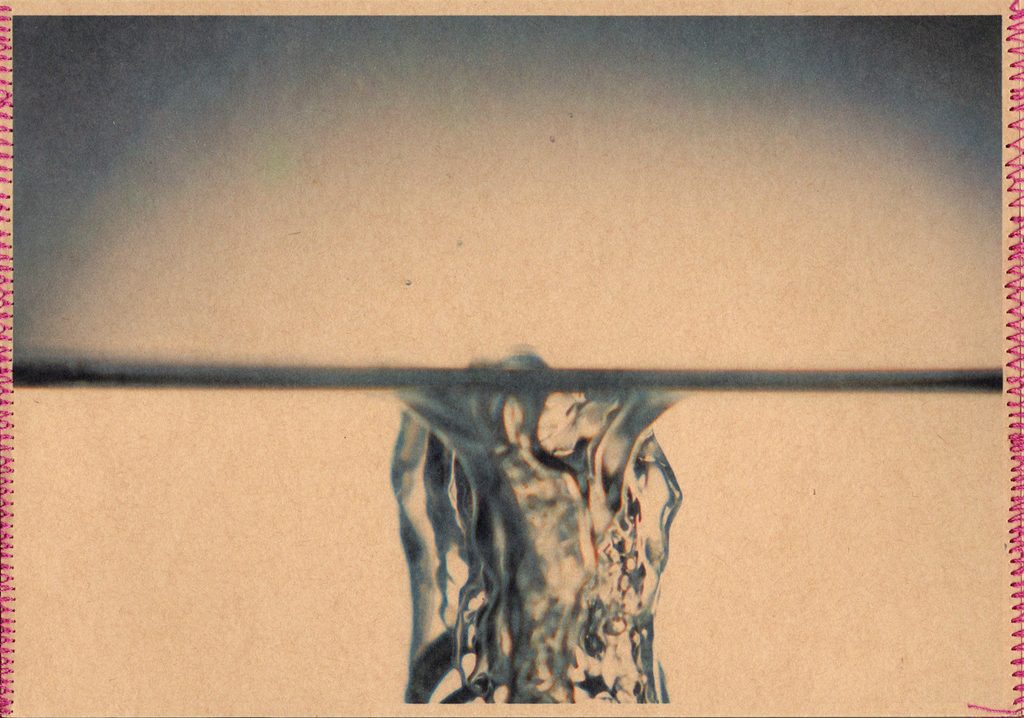
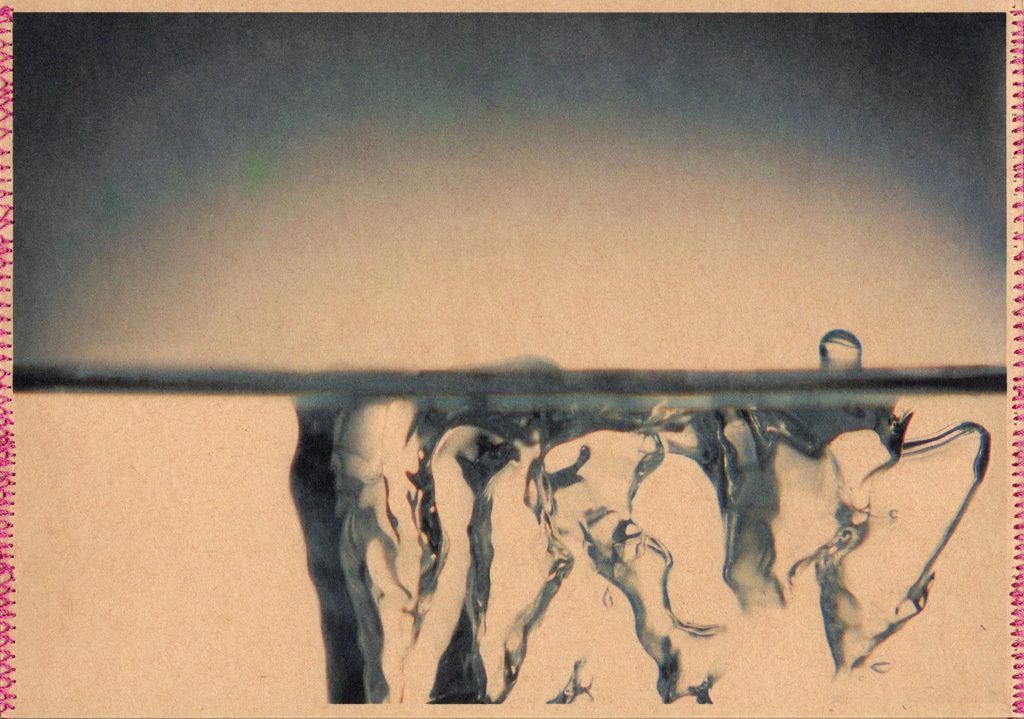
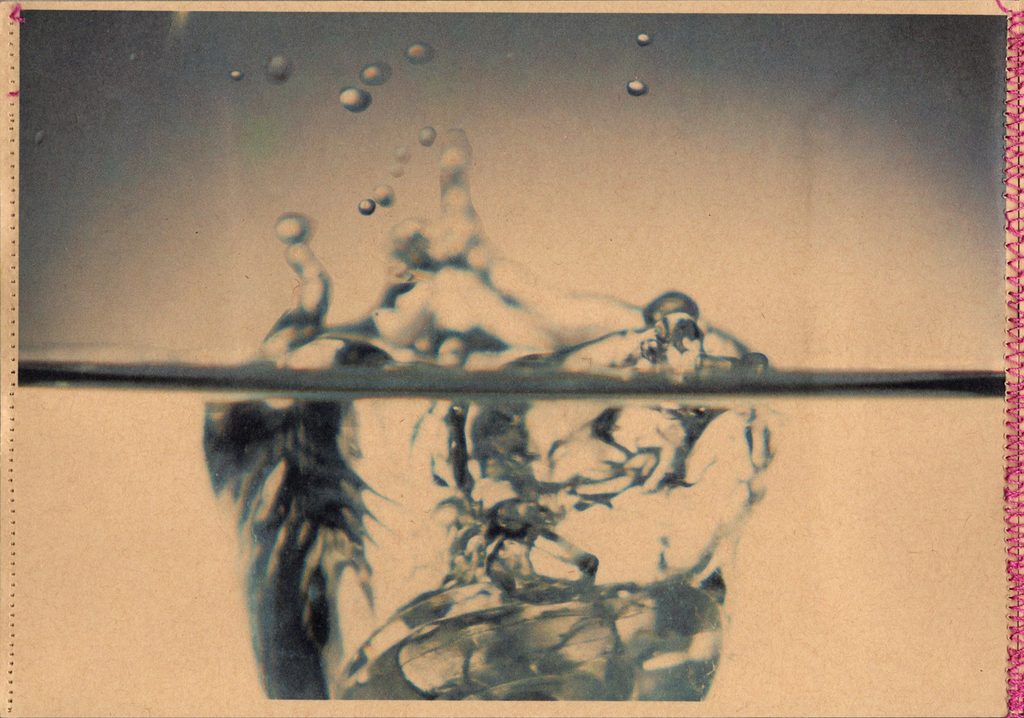
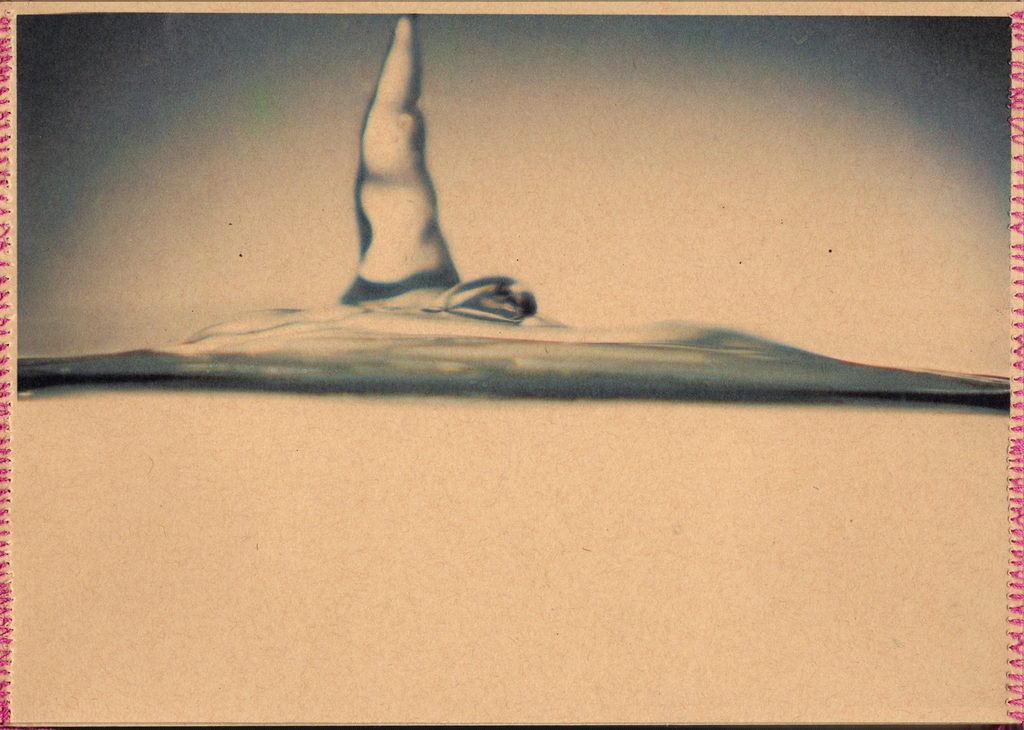
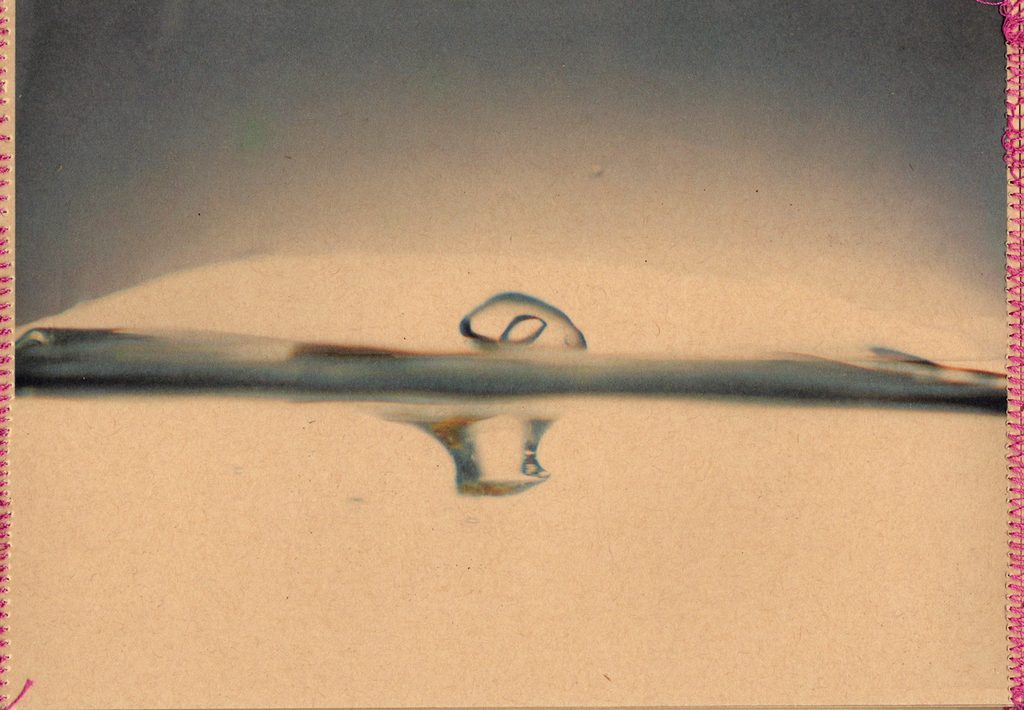
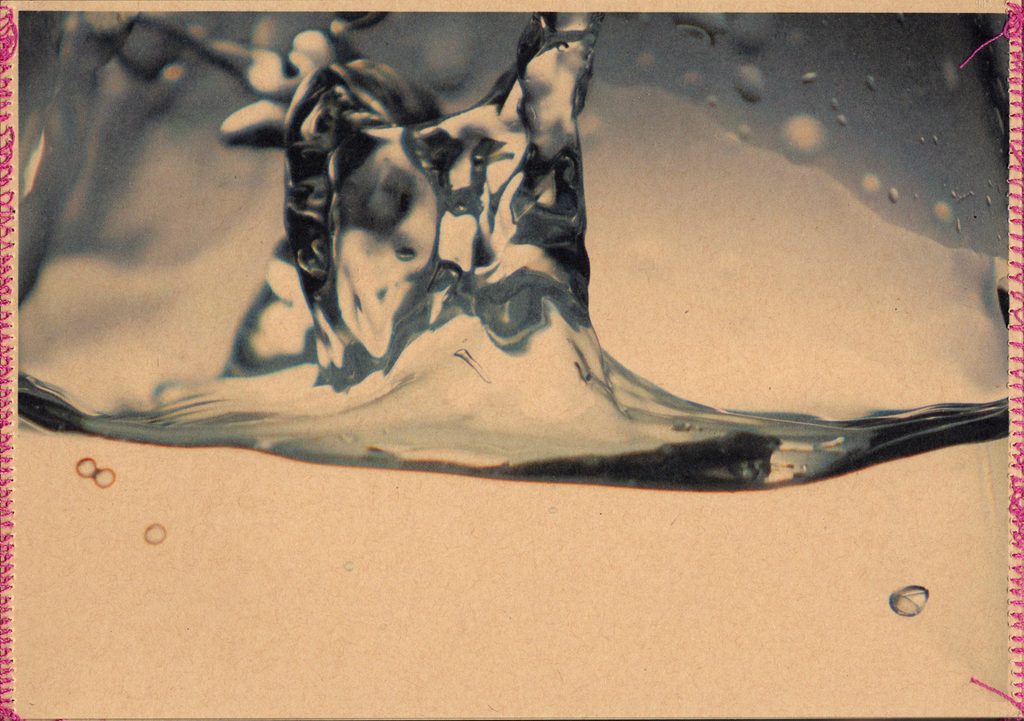
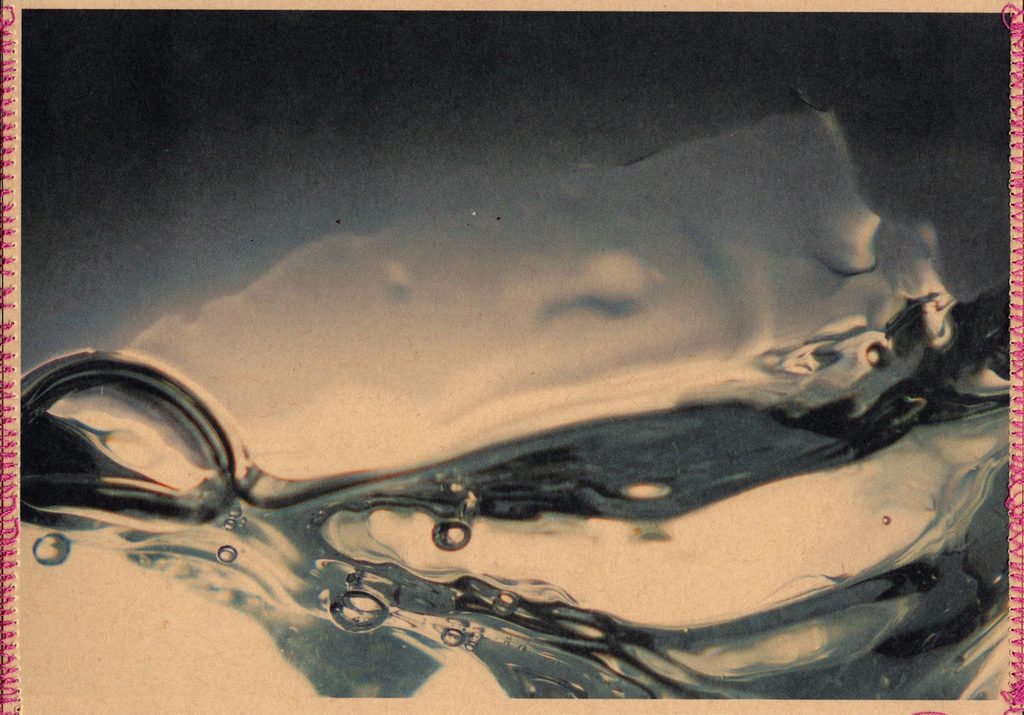
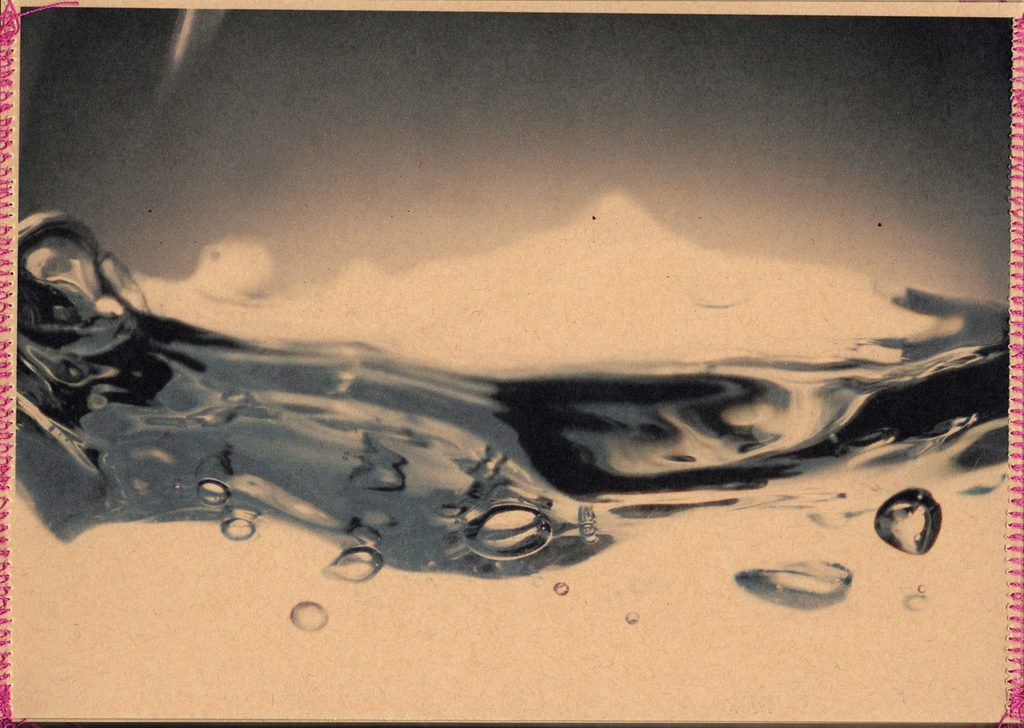
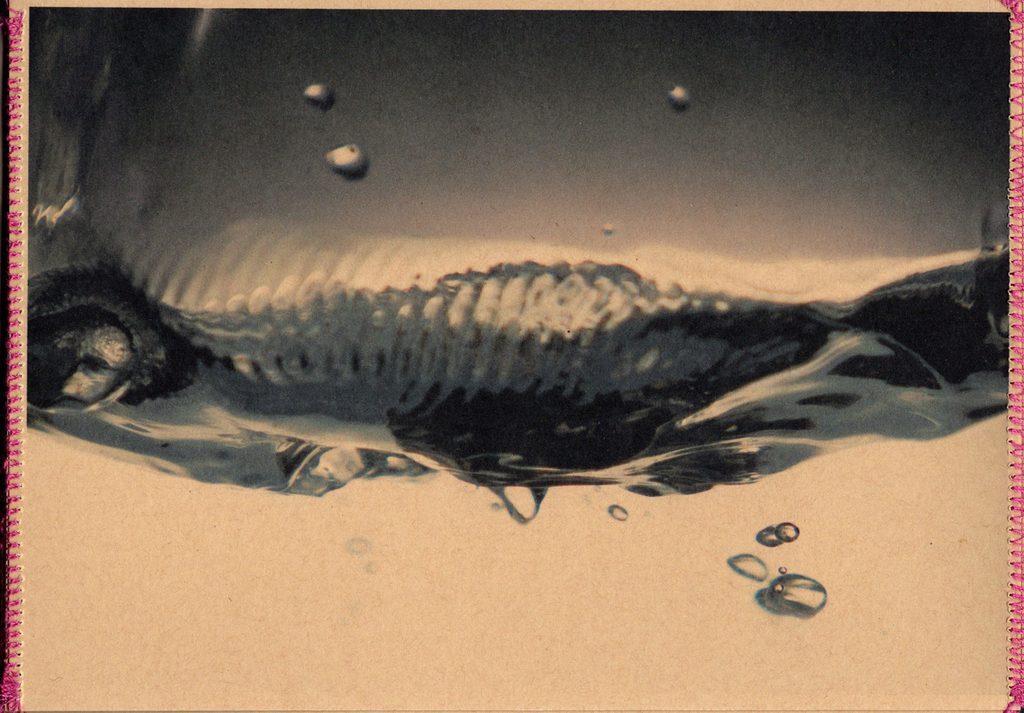
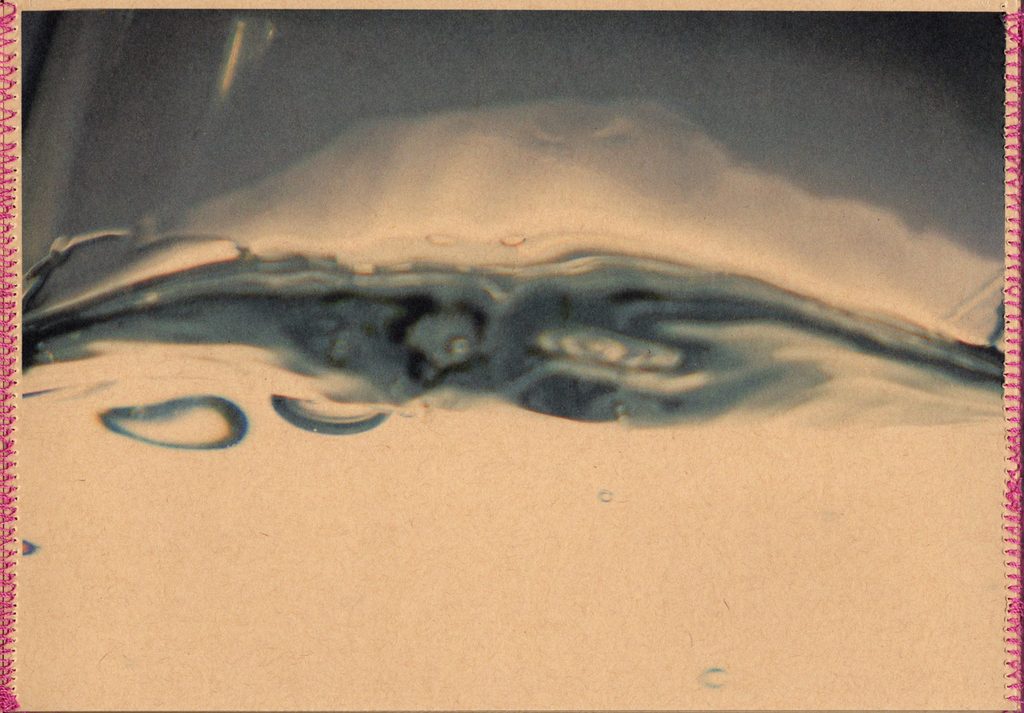
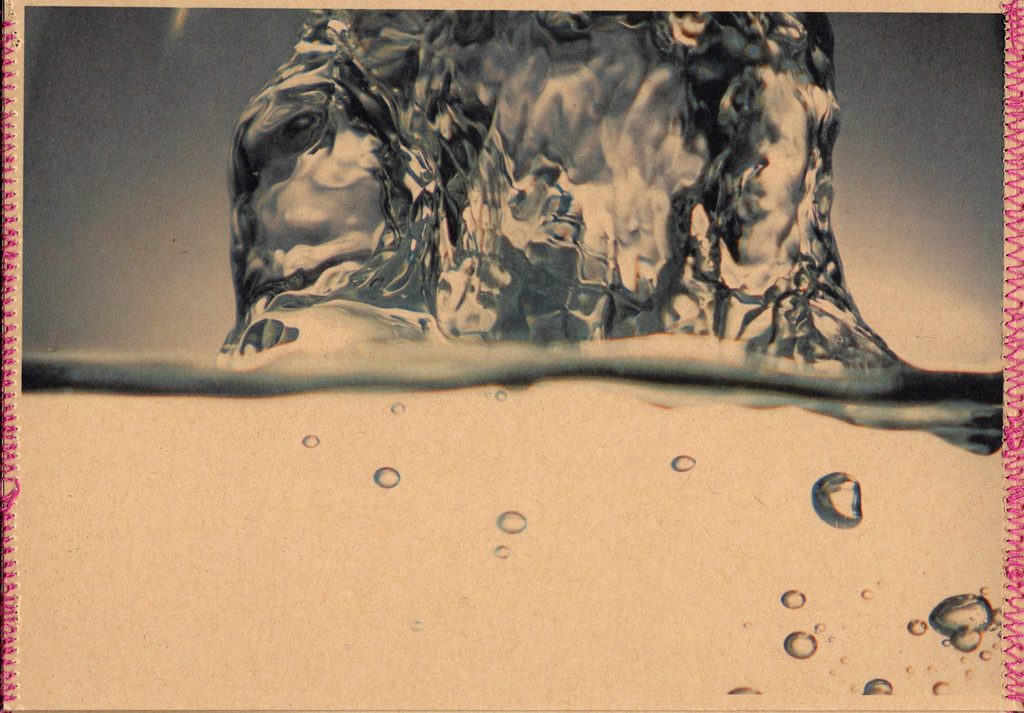
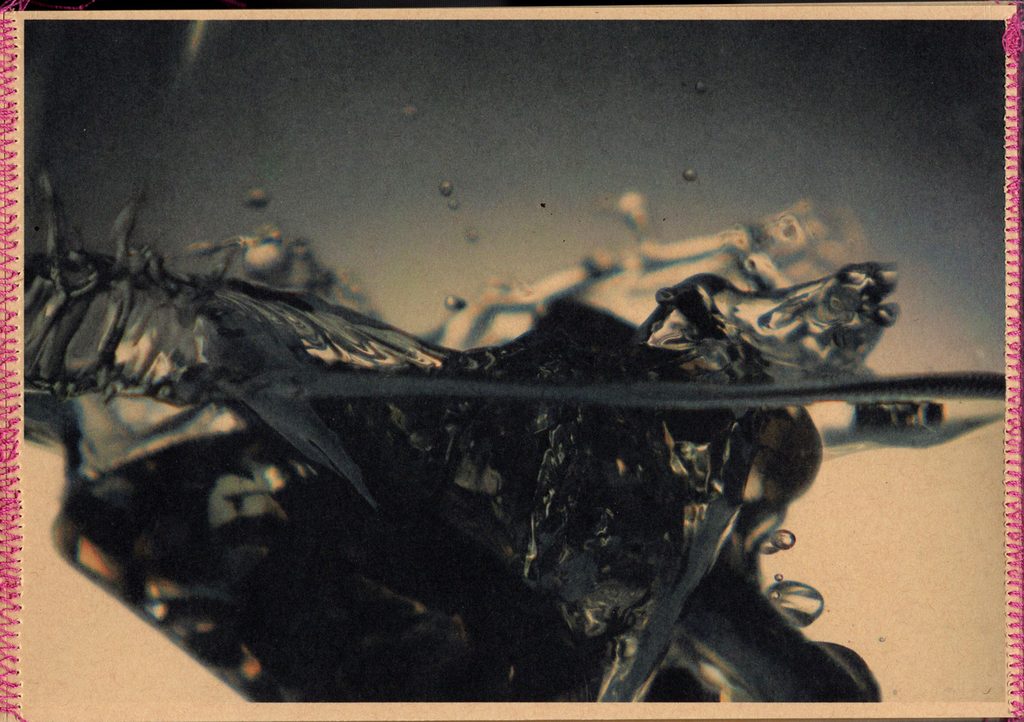
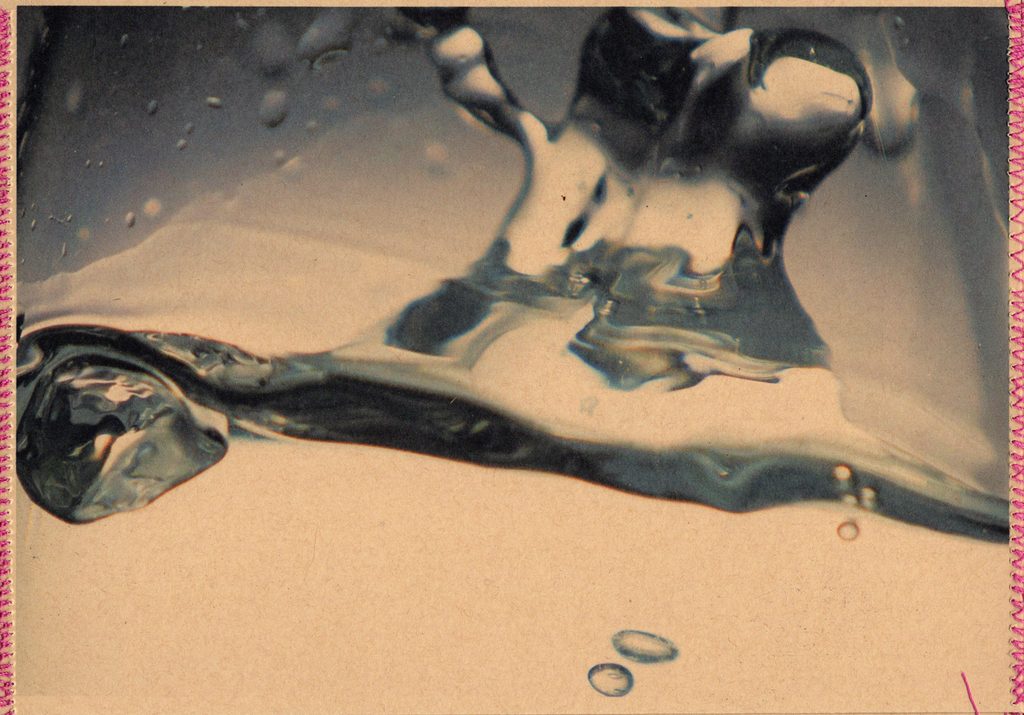
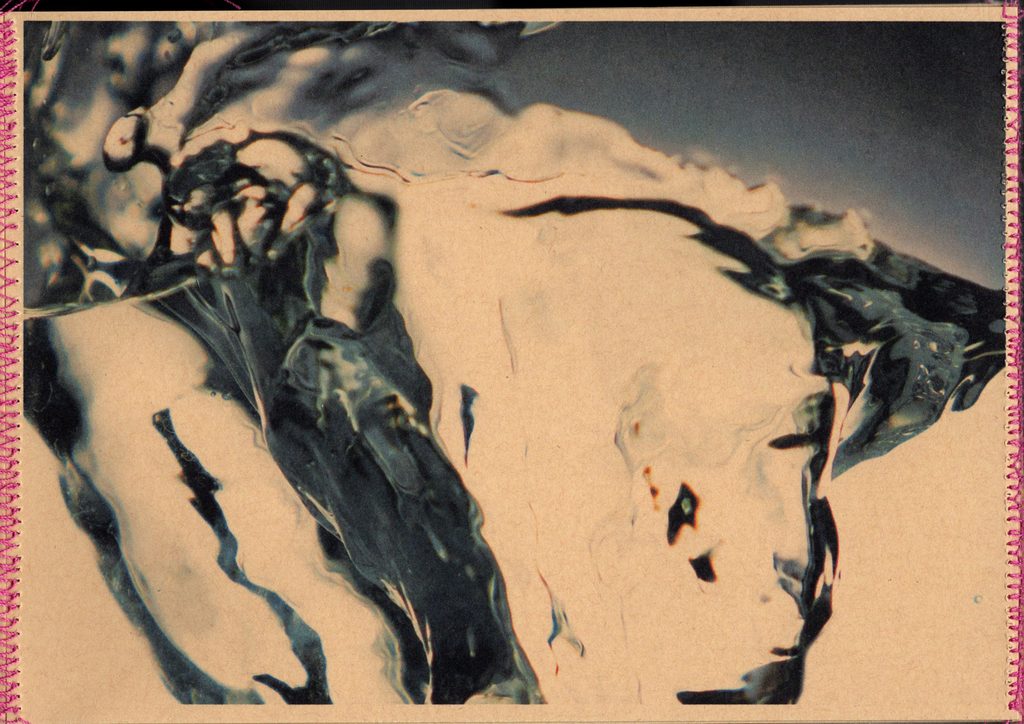
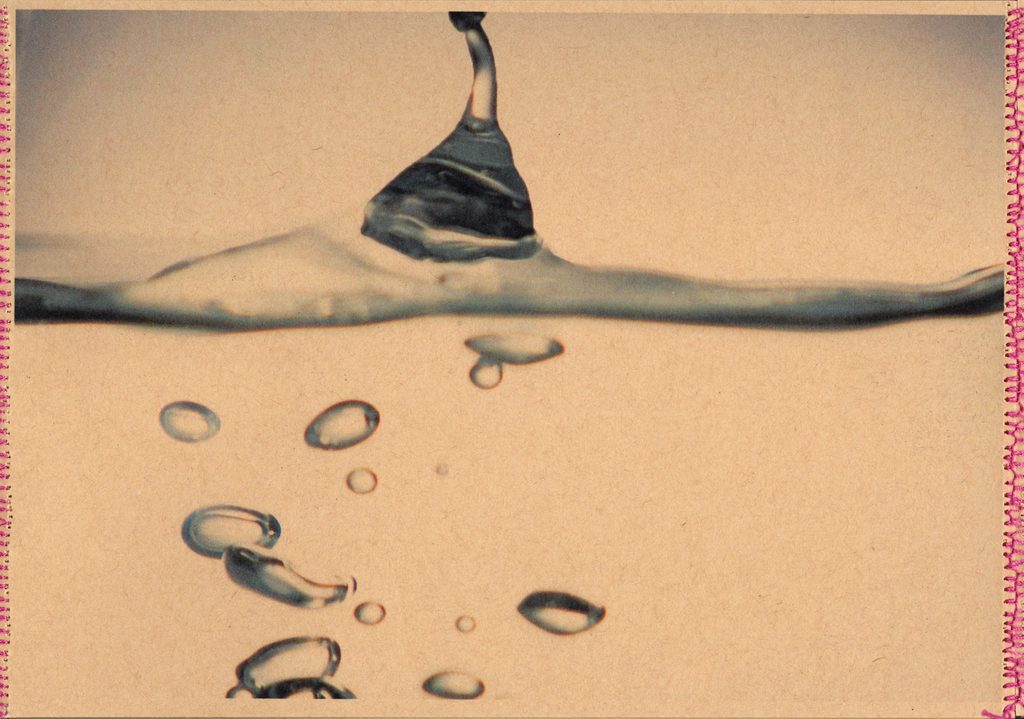
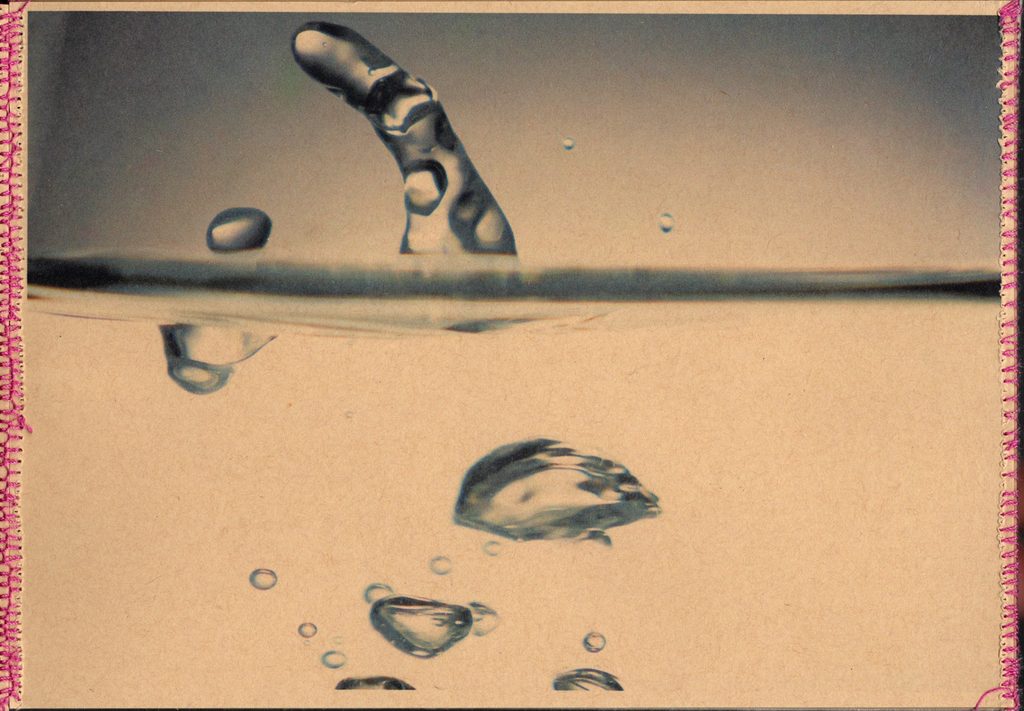
The term resilience, derived from the Latin resilire, means to bounce back or recoil[1]. Early scholarly use of the term was aimed at material sciences. In the 1950s, Irish geophysicist, Robert Mallet defined the modulus of resilience as “the energy required to rupture a material as a result of a force being applied”[2]. This artwork remarks on the effect of force applied to the surface of water. Water surface tension is defined as 𝛾 = 𝐹/𝐿; where gamma is the surface tension (Newtons/meter), F is force (Newtons) and L is the length over with the force acts (meters). Surface tension results from the cohesive forces between water molecules. At the surface of a liquid, there are forces with unlike molecules (air) causing net attractive forces towards the center of the liquid mass[3]. In Surface Tension, the convoluting surface of the water at the time of impact has been captured along with bubbles formed as the object enters the water. The shapes created on impact are abstracted in close-up views.
The idea to dupe the audience with abstracted photography is not new. The American photographer, Edward Weston (1886-1958), captured illusionary photographs around the 1930s through extreme close-ups of natural forms. His black and white photos focused on the “purity of form”[4] rather than figurative views. Also focused on the beauty of form found in natural landscapes is Canadian photographer Edward Burtynsky (1955 – ). Burtynsky employs the opposite technique to Weston. He abstracts natural forms through drone photography and extreme wide-angle views of natural forms. The beauty of his photographs highlight environmental resilience, particularly his works regarding large open cut mines and mono-culture farming[5].
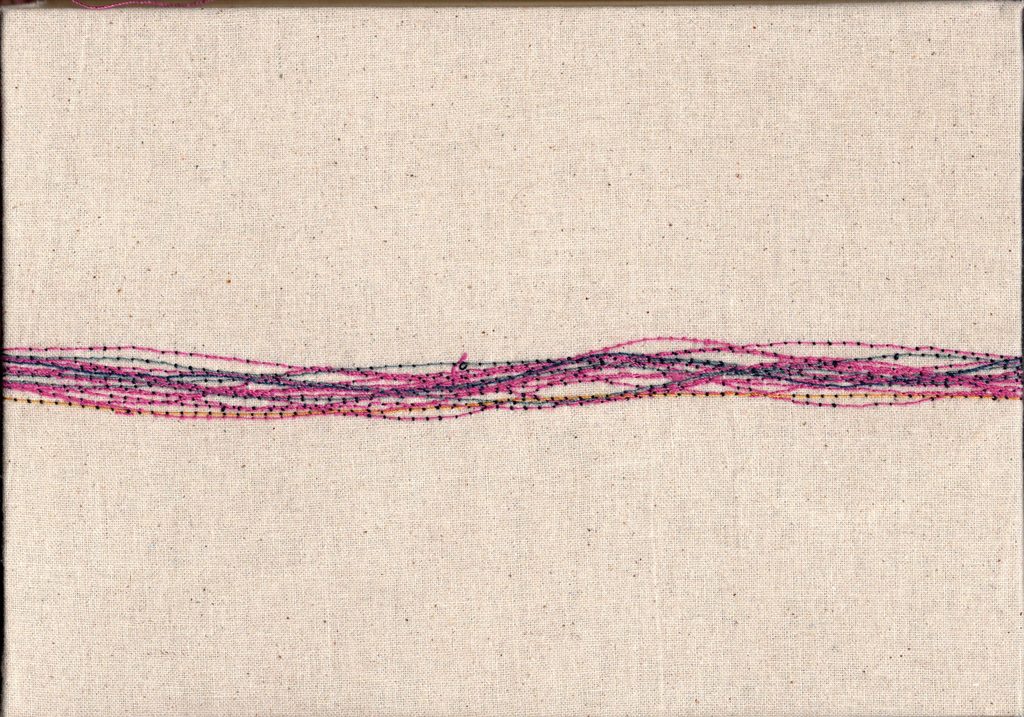
Surface Tension is a concertina book bound together with pink stitching. The stitching reflects the cohesive forces between water molecules. A narrative is formed through the pages beginning with a calm, undisturbed water surface. The surface of the water is uniquely disturbed throughout the book until the horizon line is completely lost. The horizon line is reformed in subsequent pages, reflecting the resilience of water. With the removal of agitative force and the presence of gravity, the cohesive forces between water molecules will return the surface tension to relatively flat. This is representative of a community, where cohesive bonds between people can lead to calm and productive lives. This is a continual theme in the writing of author Tim Winton. Away from writing, Winton is the face of the Save Ningaloo campaign that successfully saw Ningaloo reef added to the World Heritage list in 2003[1]. This is an ongoing project currently protesting the proposed Gascoyne Gateway Industrial Port despite Ningaloo’s protection[2]. Despite his grumbling pessimism, Winton has hope in collective community voices. “I am heartened by the attitudes of many young Australians … Their thinking about the natural world and the fragility of life is far more advanced than most of the politicians who represent then in parliament”[3].
[1] Tim Winton, Island Home, Penguin Australia Pty Ltd (2015): 108.
[2] “Gascoyne Gateway Industrial Port”, Protect Ningaloo.org.au, accessed 16 October 2025, https://www.protectningaloo.org.au/deepwaterportthreat/.
[3] Tim Winton, Island Home, Penguin Australia Pty Ltd (2015): 232.
[1] Compact Oxford Dictionary, Thesaurus and Wordpower Guide, Oxford University Press (2001):764.
[2] Alastair McAslan, “The Concept of Resilience”, Torrens Resilience Institute, (2010): 2 (1-13) https://www.flinders.edu.au/content/dam/documents/research/torrens-resilience-institute/resilience-origins-and-utility.pdf
[3] Benny Lautrup, “Surface Tension” Georgia Institute of Technology, Rev. 7.7 (January 2004): 126. (125-138) https://cns.gatech.edu/~predrag/GTcourses/PHYS-4421-04/lautrup/7.7/surface.pdf.
[4] Holden Luntz Gallery, “Edward Watson”, accessed 13 October 2025, https://www.holdenluntz.com/artists/edward-weston/
[5] Simon Schama in Edward Burtynsky, Extraction / Abstraction, Steil Publishers (2024): 5-7.